Understanding Cross-Addiction & Polysubstance Abuse: 5 Tips to Start Kicking Multiple Habits Today

If you are anything like me, one of anything isn’t ever enough. I’ve struggled with drug and alcohol dependency for a majority of my life.
And, it never seemed to be just one thing. Of course, I had my favorites or my preferred substance of choice - but that didn’t hinder me from picking up other things or using one substance to counteract the other.
If I was drinking, it was only a matter of time before I was nose deep into a bag of cocaine. When I tried to quit heroin, my answer was combining it and turning full throttle to meth.
It was a never ending destructive cycle. I would become dependent on one substance and turn around and become equally dependent on another.
This made getting sober for me more of a challenge.
I would quit one thing and find myself trailing right back to another. Justifying my behaviors and pretending like I was still making progress in my recovery.
So what is the “technical definition” of cross addiction and polysubstance use?
Cross Addiction is when someone who has recovered from one addiction develops a new addiction to a different substance or behavior. For example, a person who stops drinking alcohol might start abusing prescription pills, or someone who uses drugs might also become addicted to gambling, shopping, or food. This happens because addiction is often rooted in deeper psychological, emotional, or biological factors, making a person more vulnerable to developing other dependencies.
Polysubstance Abuse refers to the use of multiple substances at the same time or within a short period. This can include mixing drugs like alcohol and opioids, cocaine and meth, or prescription medications with street drugs. People who engage in polysubstance use often do so to enhance the effects of one substance, cope with withdrawal, or because they have a general pattern of substance misuse rather than a preference for one specific drug.
Here are some examples of what it might look like in real life:
The Party Seeker – Someone who frequently mixes alcohol with cocaine or MDMA to keep the high going while drinking excessively.
The Pain Management Case – A person prescribed opioids for pain but also uses benzodiazepines and alcohol to enhance the effects or cope with emotional distress.
The Functional Addict – A professional who takes Adderall or cocaine to stay alert during work hours but drinks heavily or smokes marijuana at night to wind down.
The Weekend Binger – Someone who mostly stays sober during the week but mixes various substances like alcohol, prescription pills, and recreational drugs every weekend.
The Escape Artist – A person using heroin or fentanyl to numb emotional pain but also taking Xanax to manage withdrawal symptoms.
The College Experimenter – A student who frequently mixes stimulants like Ritalin or Adderall with alcohol to study and party harder.
The Self-Medicating Individual – Someone struggling with anxiety or PTSD who uses a mix of marijuana, alcohol, and prescription meds to cope with emotions.
The Downer vs. Upper Cycler – A person alternating between stimulants (like meth or cocaine) and depressants (like heroin or benzos) to balance out the highs and lows.
The Relapse Spiral – Someone in recovery from one substance but unknowingly replaces it with another addiction, leading to multiple dependencies.
The Chronic Pain Patient Turned Addict – A person initially prescribed painkillers who then begins mixing them with sleeping pills or alcohol to enhance effects and develop a stronger dependency.
Treating any and all of these issues is never going to be a cake walk, but here’s the good news: you don’t have to wait for some grand intervention or a divine lightning bolt of motivation. You can start right now, where you’re at—messy, exhausted, and possibly questioning your life choices over a cold cup of coffee.
Helpful Tips For getting started Kicking The Shit
1. Get Brutally Honest with Yourself
Listen, no one likes admitting they’ve lost control—especially not us independent, "I’ve got this" types. But the first step is calling yourself out (with love, of course). Grab a journal or your Notes app and start listing out:
What substances you’re using and how often.
The situations that trigger your use (stress, boredom, toxic exes, Tuesday, etc.).
The thoughts and feelings that come up before, during, and after.
Seeing it in black and white is uncomfortable, but it’s also a wake-up call. You can’t change what you refuse to acknowledge.
2. Trace the Roots (No, Not Your Hair—Your Habits)
There’s a reason you reach for that drink, pill, or whatever your poison is. Trauma? Anxiety? Boredom? A subconscious need to self-sabotage like it’s an Olympic sport? Dig deep and ask yourself:
What am I really trying to escape from?
What do these substances give me that I don’t feel I can get elsewhere?
If I had healthier coping skills, what would they even look like?
This isn’t about shaming yourself—it’s about cracking the code on why you keep running back to something that ultimately wrecks you.
3. Baby Steps, Not a Full-On Sprint
If quitting everything cold turkey feels like trying to climb Everest in flip-flops, don’t panic. Cutting back, replacing habits, and making small, intentional choices matter. Maybe today, you drink one less beer. Maybe you swap out your usual coping mechanism with a long walk, a trashy reality TV binge, or a rage-fueled journaling session. Progress is progress.
4. Get Some Backup (Because Lone Wolfing It Sucks)
I know asking for help sounds doesn’t always sound so appealing. But listen, healing in isolation is a slow, miserable process. Whether it’s a support group, a sober friend, or even an online community, find people who get it. You don’t have to spill your soul on day one—just start by listening, engaging, and letting yourself be seen.
5. Prepare for the Emotional Hangover
When you start facing addiction head-on, feelings you’ve been stuffing down will come up. Grief. Anger. Anxiety. The sudden urge to text your ex (don’t do it). It’s normal. The trick is to sit with those feelings instead of numbing them. Therapy, journaling, meditation—find something that helps you process the chaos without running back to old habits. You can do this shit.
You’re not broken, you’re not doomed, and you sure as hell aren’t alone in this. Start small, be kind to yourself, and remember: recovery is something none of us have perfected—it’s all about persistence. And hey, if I can do it, so can you.
Now, go drink some water, get some fresh air, and remind yourself that you’re worth the effort.
No matter where you are on this journey—whether you're taking your first steps toward sobriety or fighting to maintain the progress you've made—I want you to know that I am so incredibly proud of you. Choosing to seek a better life is not easy, but it is so worth it. Keep going, even on the hard days. Especially on the hard days. Because you deserve the peace, clarity, and freedom that comes with sobriety.
If you’re still feeling lost or could use extra support, please don’t hesitate to reach out. I’m always here to listen, encourage, and help however I can. You can connect with me through my contact page or, if you’re interested in working one-on-one, I would be honored to walk this path with you. You don’t have to do this alone. Let’s work together to get you on the path you deserve to be on. 💛

If working together is something you are interested in I would be so happy to get the chance to meet you! Click the link to sign-up for a free discovery call! Check-in, get to know one another, and talk about your recovery goals <3
Sign-Up Here
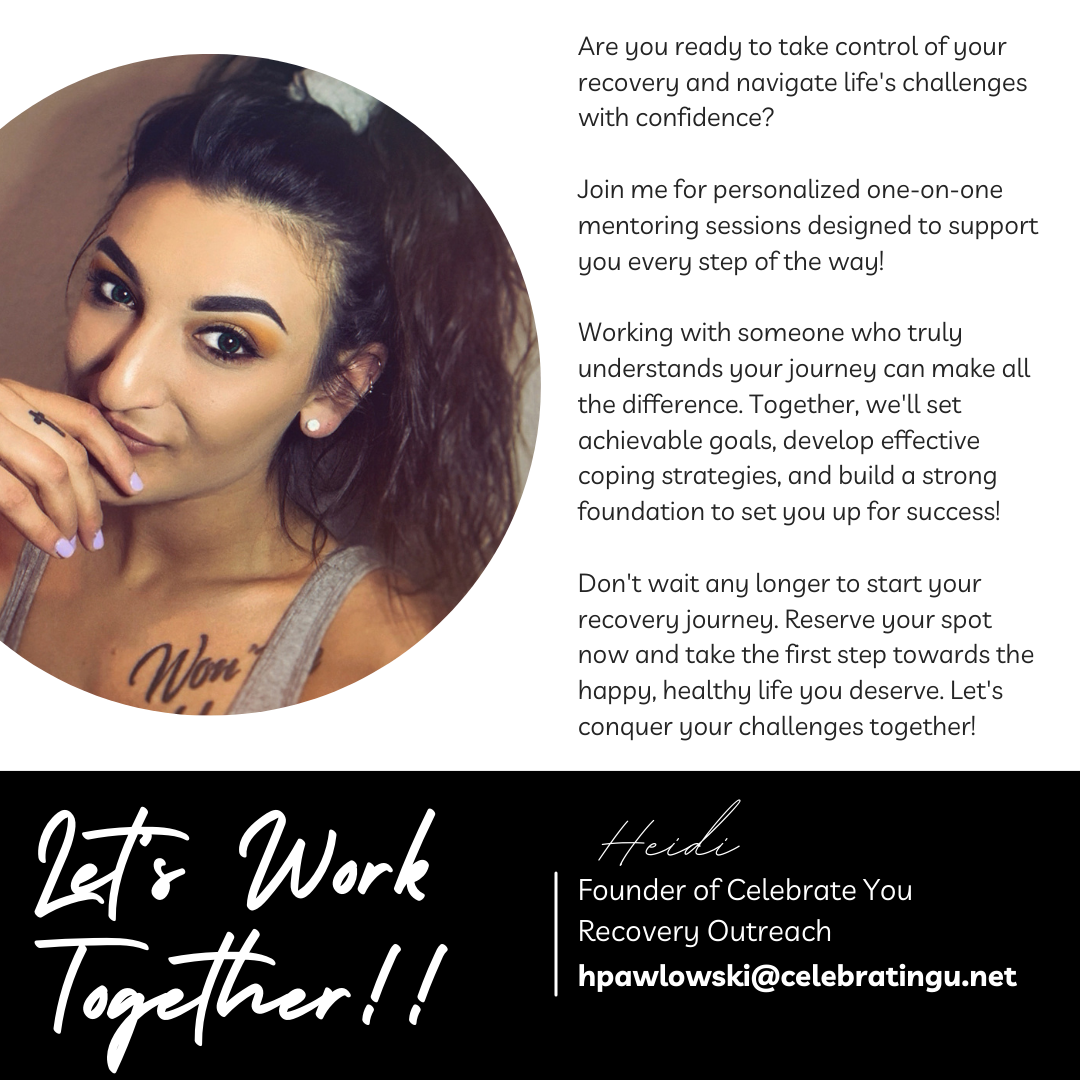
Let’s Work Together!
Our one-on-one peer mentoring sessions are designed to provide personalized, empathetic support, and guidance tailored to your unique recovery journey. These services can still be of value to you, even if you are choosing to not be on the path of absolute sobriety. Mentoring services are designed to help you rebuild your life after any hardship.
What Our Sessions Help With:
Achieving and Maintaining Sobriety: Receive practical advice, coping strategies, and emotional support to help you stay sober (If desired)
Setting and Achieving Goals: Work with your mentor to set realistic recovery goals and develop a plan to achieve them.
Overcoming Challenges: Get guidance on navigating the obstacles and triggers that arise during recovery.
Building a Support System: Learn how to build and maintain a supportive network of friends, family, and fellow recoverees.
Developing Healthy Habits: Establish routines and habits that promote a healthy, fulfilling lifestyle.
Addressing Additional Struggles Aside From Substance or Alcohol Use
What You’ll Get:
This is a one time purchase. You will receive two individual 1:1 virtual sessions with me, scheduled at your own convenience. Sessions are 45 mins - 1 hr long dependent on individual client. Sessions will be held per clients request via zoom audio, video, or phone call. 24/7 texting options available! Looking for daily support ? Or a quick check-in? Let me know and we can set it up!
Purpose and Benefits of Peer Mentoring:
The purpose behind peer mentoring is to provide support from someone who has been in your shoes. Peer mentors offer insights, encouragement, and practical advice drawn from their own experiences with addiction and recovery. This type of support can be incredibly powerful and beneficial for your sobriety, as it:
Promotes Accountability: Regular check-ins help keep you accountable to your recovery goals.
Fosters Connection: Building a relationship with someone who understands your journey can reduce feelings of isolation and loneliness.
Enhances Motivation: Seeing the progress and success of your mentor can inspire and motivate you to continue your recovery efforts.
Provides Hope: Knowing that your mentor has successfully navigated recovery can give you hope and confidence in your own ability to achieve sobriety.
Take the next step in your recovery journey today! I am so excited to get the opportunity to work with you!
Disclaimer:
Our peer mentoring services are designed to offer support, guidance, and encouragement through shared experiences in addiction recovery. However, they are not a substitute for professional or medical advice, diagnosis, or treatment. We strongly recommend that you seek the advice of your physician, therapist, or other qualified health providers with any questions you may have regarding a medical condition or mental health issue. Never disregard professional medical advice or delay seeking it because of something you have discussed with a peer mentor.
For additional helpful resources please feel free to head over to our digital library that is packed full of different workbooks, ebooks, and tools to utilize on your own as you navigate your recovery journey.