How To Avoid Trading One Addiction For Another
Addiction replacement, also known as addiction substitution or transfer addiction, refers to an individual in recovery or rehabilitation replacing one addiction with another.
It’s all too common for individuals on their way to a path of recovery - myself included.
What Is Addiction Substitution?
This occurs when you shift your compulsive behaviors from one substance or activity to another. This often happens when the underlying causes of your addiction, such as emotional pain, trauma, or unresolved mental health issues, are not fully addressed.
The brain’s reward system, seeking relief or stimulation, may latch onto a new habit or behavior that provides you with temporary satisfaction.
While the new addiction may seem less harmful than the original one, it can still disrupt life, relationships, and health if left unchecked.
Why Does This Happen?
The root cause often lies in the brain’s reward system. Dopamine, the "feel-good" neurotransmitter, plays a central role in addiction.
When you give up your primary addiction, the brain craves another source of dopamine to fill the void.
Without addressing the deeper emotional and psychological drivers of addiction, the cycle can continue in a different form.
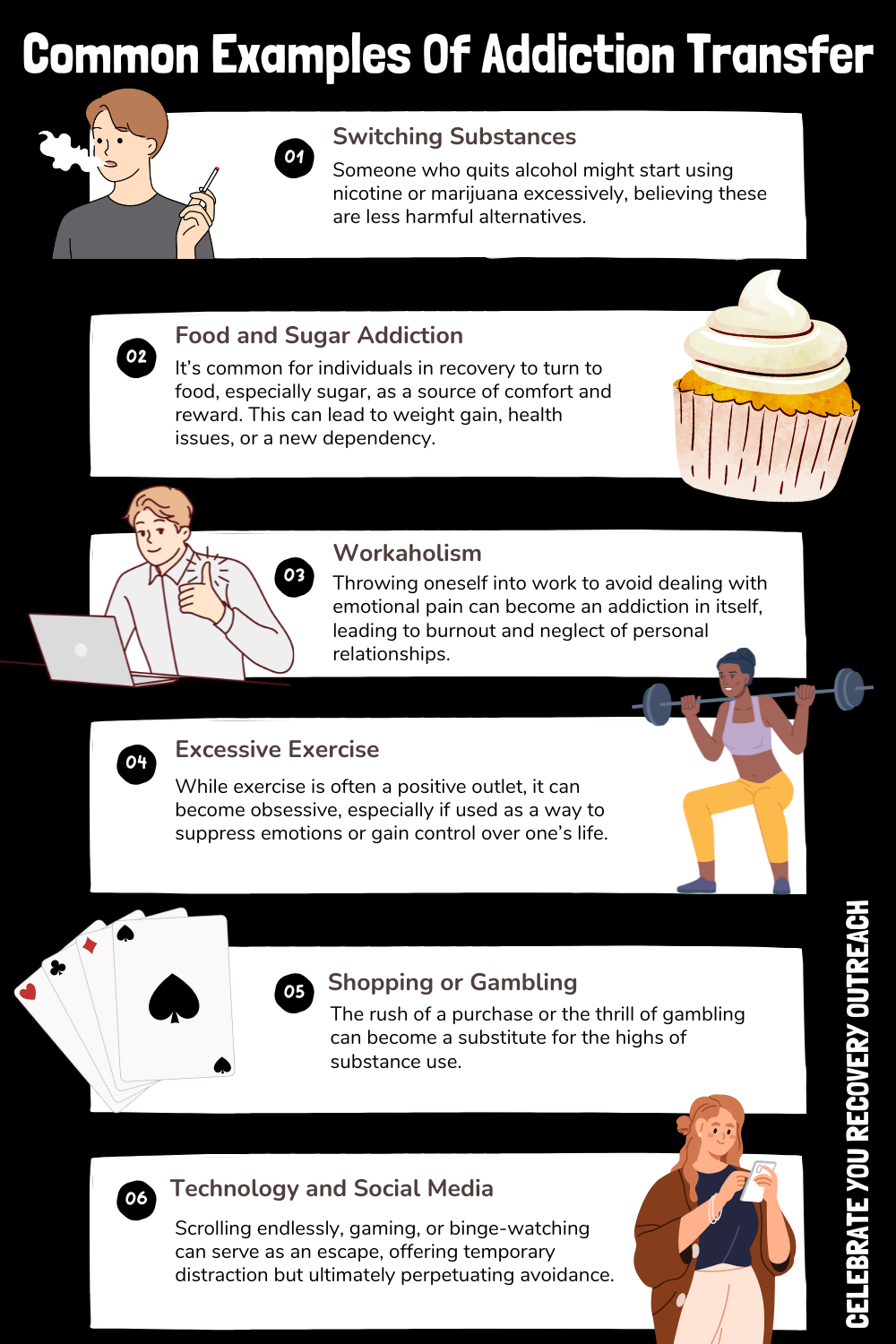
After getting clean and sober from hard drugs, I found myself always making an excuse to drink alcohol. Because it wasn’t my drug of choice, and in my mind, not nearly as bad… I didn’t see the harm.
It took very little time for my drinking to catch up to me. It did just as much damage, if not more to my life.
I went from “socially drinking” telling myself that everyone did it and there was no reason I couldn’t do the same. To negotiating with myself and trying to moderate. To failing and drinking alone so no one else had to know about it.
Over the years, my inability to do the work required, and my unwillingness to fully give alcohol up for good, cost me a lot.
I was still convinced that it wasn’t a problem. It wasn’t heroin or meth so I was doing just fine.
Alcohol impacted my physical health. I felt like shit all the time. I was unable to be present or reliable when it came to work or my every day responsibilities. I built up a mountain of lies. I was not capable of handling my emotions.
Drinking escalated my anxiety and pushed suicidal thoughts into my head. Alcohol made me a bad mom. I was not able to be fully present for my children. I racked up several drinking and driving charges and lost my driving privileges, indefinitely.
I finally had my wake-up call.
Alcohol turned out to be just as bad, if not worse than every other substance I fell into the habit of abusing.
Making Change Happen
I was tired of going through the same shit. Over and over and OVER again. Putting an end to the cycle goes far beyond just staying clean from all substances. The hardest part is addressing what’s really going on beneath all of that. What is the driving force behind falling back into the same destructive patterns?
“You’re struggling to make the change because the old behavior is still meeting a need.”
Quick Tips For Breaking The Cycle
Here are some things that I HEAVILY implemented to start seeing a change in my addictive patterns and start to live out a more balanced life.
1. Be Honest With Yourself
For the love of God, listen to yourself. You know when you’re bullshitting. Sometimes we just don’t want to hear it. We tend to change the dialogue on purpose. We know all along if we should or shouldn’t be doing something.
Don’t go dipping your toes in the water just to prove to yourself that you knew better.
Being honest is hard. Especially at first or if you are already in the midst of yet another destructive cycle.
Don’t be so hard on yourself. Being self-aware and admitting that where you’re at is not where you want to be, is the biggest step you can ever take. The more you try to kid yourself the longer and harder the fall.
Now is the perfect time to identify the issue and start doing things differently.
2. Address The Underlying Issues
You can’t grow if you keep running away from what needs attention. Patience is everything.
Whether it’s unresolved trauma, self-esteem issues, or the good ol’ need to numb every uncomfortable emotion, these factors didn’t just randomly show up one day—they’ve been brewing for a while.
If these were easy fixes they wouldn’t still be hindering you. Doing the work to heal from these things is very difficult. But, it is possible! Facing these issues may be uncomfortable, challenging, and trigger-some, but the alternative is staying in a constant cycle of chaos and destruction.
Steps I Took To Start Working On A Better Me:
Started going to NA meetings and found a sponsor. Started working a 12 step program
Went to outpatient counseling/therapy and worked 1:1 with someone who I trusted to start unpacking my garage
Stayed consistent with daily journaling. This not only helped my sobriety but helped me sort through my own thoughts and regulate my emotions. In the long-term, journaling has given me the opportunity to look back on past times and see the growth and change that has taken place
3. Support Network
It’s stressed continuously in recovery to establish a positive support network. This will look different for everyone. Your support network needs to include those you can count on. Those who have your best interest at the forefront. Those who will put you in check when you are failing to do so for yourself. Those whom you trust and can turn to in both the good and bad times.
For me, this was one specific counselor that I had, my sponsor, and my step mother. I also have a small handful of friends that bring such light and direction to my life. I don’t know where I would be in my recovery without them.
Having good people in your corner allows you to have comfort in challenging times. It gives you a place to turn when things get heavy. It gives you a lifeline to realistic and level headed solutions when you get lost.
4. Develop Healthy Coping Mechanisms
Again, this is not something that happens over night. Just as the bad habits took time to accumulate - same applies for the good. You have to make the same conscious decisions over and over and OVER again and dedicate yourself to being consistent, if you plan to unlearn all of the unhealthy ways you’ve become so accustomed to coping.
The more time and effort you put into learning new things, and practicing them in your daily life there will be no room to fail.
Explore hobbies or activities that can bring you some form of joy and fulfillment, such as art, music, volunteering, or spending time in nature. Replace the destructive habits with constructive ones. Ones that help enhance your mental, physical, and emotional well-being.
5. Maintain Balance
Oh man, did I struggle in this department! Even outside of substance use I have a strong tendency to find something that captivates me or takes up my time and oversaturate myself in it entirely.
In 2021, I was just coming out of a recent relapse (my last) trying to stay sober, trying to mend my heart after an abrupt ending to a long-term relationship. I was trying to work and get as much money together as I could to pay my bills (now that I was single and alone), and also deal with the legal and financial repercussions of my drinking.
I was working full-time, third shift, as a caregiver at an assisted living facility. I was also working as a part-time waitress at a local restaurant in town. I was also picking up any hours that I could at the bar and grill downstairs from where my apartment was located.
Being constantly consumed in work, allowed for not much downtime. I wasn’t forced to sit in my feelings or have time to reflect towards what was really going on in my life at all. I felt like work was a positive outlet because it didn't give me any void time to want to use drugs or alcohol either.
However, overworking myself came with its downfall, as you can probably imagine. The burnout came quick. I was working from 10pm-6am almost every night. I would bring my waitressing clothes with me and change, then head to the restaurant from 7am-2pm.
It wasn’t hard at all for the idea of using to cross my mind. I tried convincing myself that a shot of meth would for sure be the answer to help me get through all the hours I was working without wanting to fall on my face.
I knew I couldn’t go back in that direction. I knew I had to make changes before I ended up in an even worse predicament.
I was not eating right, sleeping right, or prioritizing any proper form of self-care and balance. This is a prime example of needing to establish a set routine and schedule that still checks all the boxes, yet leaves you with room to take care of yourself.
Finding balance is super important. It can be challenging to figure out how to divide your time and energy in the right ways to where you’re meeting all of your needs, responsibilities, goals, and sobriety all at the same time.
It helped me tremendously to write things down. Make a list of things you need to do. Things that are a priority. Things that you promise to do for yourself. Things you promise to do for your recovery. Make a daily/monthly schedule that you will strictly follow.
6. Boundaries
Boundaries go hand-in-hand with all the other areas we’ve already discussed.
Boundaries need to be set in place when it comes to being honest with yourself. You are the only one in control of your own life and how it turns out.
If you know that going to a social gathering might make your thoughts trail off to picking up a drink, it’s up to you to practice some self-discipline and maybe make the call to miss out on the event all together.
Make different arrangements or choose to spend your time in another way that doesn’t sacrifice your well-being or sobriety.
When it comes to setting boundaries with others… This is SUPER important. I’m sure I’m not telling you something you don’t already know, BUT if you continue to surround yourself with people who are doing nothing and going no where - you are going to be stuck right there with them.
If you do not respectfully distance yourself from individuals who disrupt your peace, mental state, sobriety, or over all well-being then you cannot complain when chaos is still being brought into your life.
When you separate yourself from the negative and surround yourself with the positive you’ll see such a shift in different areas of your life. Your mindset, your attitude, your self-esteem.
Learn how to say “no.” Learn how to stick up for yourself and defend what’s in your best interest and for your greater good.
good things happen when you try
Avoiding addictive behaviors all together can be really hard. You might not even make the realization until you’re smack dab in the middle of another shit storm…
But the good news? You’ve already proven you can quit one thing - now it’s just about not replacing it with another shiny, dopamine-drenched distraction.
Keep showing up for yourself, one day at a time. And hey, if all else fails, coffee and journaling probably won’t ruin your life. Probably. 😉

Have you ever found yourself swapping one addiction for another? Maybe you ditched the booze but suddenly couldn’t stop binge-watching true crime documentaries or inhaling entire bags of chips. (No judgment; we’ve all been there.) Share your experiences in the comments below! What did you do to break free from those patterns? Your story might just inspire someone else who’s navigating the same struggle.
If you’re currently struggling on your road to recovery, know that you’re not alone—and I’m here to help however I can. Sometimes, having someone in your corner who gets it can make all the difference. If working one-on-one with a mentor like me is something you feel could benefit your journey, click here to learn more and schedule a call. I’d love the chance to connect and walk this path with you.
Let’s Work Together!
Our one-on-one peer mentoring sessions are designed to provide personalized, empathetic support, and guidance tailored to your unique recovery journey. These services can still be of value to you, even if you are choosing to not be on the path of absolute sobriety. Mentoring services are designed to help you rebuild your life after any hardship.
What Our Sessions Help With:
Achieving and Maintaining Sobriety: Receive practical advice, coping strategies, and emotional support to help you stay sober (If desired)
Setting and Achieving Goals: Work with your mentor to set realistic recovery goals and develop a plan to achieve them.
Overcoming Challenges: Get guidance on navigating the obstacles and triggers that arise during recovery.
Building a Support System: Learn how to build and maintain a supportive network of friends, family, and fellow recoverees.
Developing Healthy Habits: Establish routines and habits that promote a healthy, fulfilling lifestyle.
Addressing Additional Struggles Aside From Substance or Alcohol Use
What You’ll Get:
This is a one time purchase. You will receive two individual 1:1 virtual sessions with me, scheduled at your own convenience. Sessions are 45 mins - 1 hr long dependent on individual client. Sessions will be held per clients request via zoom audio, video, or phone call. 24/7 texting options available! Looking for daily support ? Or a quick check-in? Let me know and we can set it up!
Purpose and Benefits of Peer Mentoring:
The purpose behind peer mentoring is to provide support from someone who has been in your shoes. Peer mentors offer insights, encouragement, and practical advice drawn from their own experiences with addiction and recovery. This type of support can be incredibly powerful and beneficial for your sobriety, as it:
Promotes Accountability: Regular check-ins help keep you accountable to your recovery goals.
Fosters Connection: Building a relationship with someone who understands your journey can reduce feelings of isolation and loneliness.
Enhances Motivation: Seeing the progress and success of your mentor can inspire and motivate you to continue your recovery efforts.
Provides Hope: Knowing that your mentor has successfully navigated recovery can give you hope and confidence in your own ability to achieve sobriety.
Take the next step in your recovery journey today! I am so excited to get the opportunity to work with you!
Disclaimer:
Our peer mentoring services are designed to offer support, guidance, and encouragement through shared experiences in addiction recovery. However, they are not a substitute for professional or medical advice, diagnosis, or treatment. We strongly recommend that you seek the advice of your physician, therapist, or other qualified health providers with any questions you may have regarding a medical condition or mental health issue. Never disregard professional medical advice or delay seeking it because of something you have discussed with a peer mentor.
Before you go, don’t forget to check out our digital library, packed with resources designed to support you wherever you are on your recovery journey. There’s even a Mental Health Bundle that covers CBT and DBT therapy—two incredibly helpful tools for avoiding and navigating cross-addiction. These exercises can help you identify unhealthy patterns, set boundaries, and take back control of your life. Head over to the library now to grab the support you need!

My road to recovery and long-term sobriety went hand in hand with learning how to face my mental health struggles. I created this Mental Health Worksheet Bundle from that perspective — because healing isn’t just about changing your habits, it’s about taking a real look inward and working through the things weighing you down.
Each lesson plan and topic covered within this digital resource has been carefully chosen and crafted to address the core challenges that many face.
From maintaining balance in everyday life to reclaiming power over your thoughts and actions. This workbook offers practical, actionable strategies that are rooted in both my personal experiences and the latest in mental health education.
This bundle includes exercises inspired by CBT and DBT, along with a wide range of mental health topics designed to help you understand yourself, challenge unhealthy thought patterns, process emotions, unpack the heavy shit, and start creating healthier ways to cope.
Whether you’re in recovery or simply working on yourself, these worksheets are here to help you dig deeper, heal what you can, and start actually living instead of just surviving. 🖤
Inner Strength Worksheet Bundle Lessons & Activities:
✩ Affirmations
✩ Cognitive Distortions
✩ Taming Your Inner Critic
✩ Personalized Letters To Self
✩ Healing Your Inner Child
✩ CBT Therapy
✩ DBT Therapy
✩ Self-Forgiveness
✩ Letting Go Of The Past
✩ Coping Mechanisms Vs. Defense Mechanisms
✩ Feelings Wheel
✩ Identifying Emotions
✩ Emotional Regulation
✩ How To Feel Your Feelings
✩ How To Hack Your Happy Hormones
✩ Depression Iceberg
✩ Cognitive Triangle
✩ Cognitive Model
✩ R.A.I.N Technique
✩ Identifying Stressors
✩ Setting Boundaries
✩ Distress Tolerance
✩ V.I.T.A.L.S Technique
✩ H.A.L.T Technique
✩ Worry Jar
✩ Tree of Life
✩ Wheel Of Life
✩ Core Values
& MORE!
Tracker Bundle Included:
✩ Daily Planner
✩ Weekly Planner
✩ Daily Reflections
✩ Monthly Planner
✩ Self-Care Tracker
✩ Mood Tracker
✩ Habit Tracker
✩ Workout Tracker
✩ Reading Tracker
✩ Goal Tracker
✩ Wellness Tracker
✩ Gratitude Journal
By using these trackers regularly, you’ll gain a clearer understanding of your emotional and mental states, enabling you to make informed decisions and adjustments as needed. The bundle empowers you to take charge of your recovery process and overall well-being by providing a structured yet flexible framework to keep you aligned with your goals.
This product is designed with your convenience in mind. As a digital download, you have the flexibility to print these worksheets whenever you need them, whether for daily use, periodic self-check-ins, or focused therapy sessions. The A4 standard size ensures compatibility with most printers, and you can print unlimited copies for your personal use.
✩ Important Disclaimer ✩
Please note that this workbook is a supplemental tool meant to support your mental health journey. It is not intended to replace professional therapy, medical advice, or treatment. If you have any concerns about your mental health or well-being, please consult with a qualified professional.
Product Details:
Digital Download Only: This product is a digital download, and no physical product will be shipped.
Lifetime Use: Print and use these worksheets as often as needed to support your mental health journey.
Non-Refundable: Due to the nature of digital downloads, this product is non-refundable. However, customer satisfaction is our top priority. If you encounter any issues, have questions, or need assistance, please don’t hesitate to reach out. I'm here and happy to help!
This product is copyrighted and all rights are reserved by Celebrate You Recovery Outreach © It is intended for personal use only and should not be distributed, reproduced, or used for commercial purposes. Unauthorized use is prohibited.
Thank you for choosing this workbook as a part of your mental health journey. Your trust and satisfaction are paramount, and I'm committed to ensuring you have a positive experience. Enjoy :)