

Creating a Personalized Recovery Plan: A Step-by-Step Guide

Taking the time to create your own personal recovery plan is an essential step in helping you obtain long-term success.
A recovery plan is not only used in terms of seeking absolute sobriety. Recovering from anything - substances, alcohol, trauma, mental health all require an honest and independent evaluation of one’s self.
Recovery is not about anyone else’s expectations, other than your own, being met.
Recovery is about the process you go through and the obstacles you overcome to achieve the goals you set for yourself. The goals you set should align with the life you want to obtain and maintain. For most, that does include absolute sobriety.
There is no right or wrong way to recover. What matters most is what you are doing to bring yourself to a place of peace, happiness, and full functionability.
For me personally, I knew I had to remain abstinent from all drugs and alcohol. I had wasted plenty of time trying to convince myself otherwise. Whenever I tried to balance out my life and refused to cut it all out completely - I failed.
I made excuses and tried giving myself ultimatums. Nothing ever worked until I made the decision to be honest with myself and make the difficult (but necessary) changes I needed to.
One of the most rewarding aspects of creating a recovery plan is the realization that you truly hold the answers. By designing your own plan, you’re not just following someone else’s path—you’re setting yourself up for success on your terms. It’s a powerful reminder that you’re capable of taking back the control you once thought was lost.
What Is a Personalized Recovery Plan?
A recovery plan is like a structured roadmap designed to guide you through the challenges of recovery while helping you achieve your goals. It incorporates strategies, tools, and practices that address every aspect of your well-being—physical, mental, emotional, and spiritual.
Personalized recovery plans are important because no two recovery journeys are the same. By creating a plan that reflects your individual needs, you're more likely to stay motivated and build a lifestyle that supports long-term goals.
Why Is a Recovery Plan Important?
Clarity: It provides clear, actionable steps to navigate recovery challenges.
Accountability: A plan helps you track your progress and stay focused on your goals.
Support: It identifies resources and people to lean on when you need help.
Empowerment: By tailoring the plan to your needs, you take ownership of your recovery.
Breaking Down a Recovery Plan: Key Areas
1. Setting Your Goals
Short-Term Goals: Focus on daily or weekly actions, such as attending meetings or practicing self-care.
Long-Term Goals: These might include achieving a year of sobriety, improving relationships, or pursuing education or career goals.
Tip: Use the SMART framework—Specific, Measurable, Achievable, Relevant, and Time-bound—to set clear goals.
2. Identifying Your Triggers
Make a list of situations, emotions, or people that trigger cravings or negative behaviors.
Plan proactive strategies to manage or avoid these triggers.
Example: If stress at work is a trigger, incorporate relaxation techniques like deep breathing or journaling into your routine.
3. Developing Coping Strategies
Healthy Outlets: Include physical activities, hobbies, mindfulness practices, and creative outlets.
Emotional Regulation: Practice techniques like the HALT method (checking if you’re Hungry, Angry, Lonely, or Tired) or grounding exercises to stay present.
Support Systems: Turn to trusted friends, family, or support groups when things get tough.
4. Building a Support Network
List key people who can support your recovery journey, such as a sponsor, therapist, peer support group, or loved ones.
Identify local or virtual recovery groups to join.
Tip: Regularly communicate with your support network to maintain accountability and connection.
5. Prioritizing Your Health
Physical Health: Focus on nutrition, exercise, and regular medical checkups.
Mental Health: Address underlying issues like anxiety, depression, or trauma through therapy or counseling.
Spiritual Health: Engage in practices that bring you peace and purpose, such as meditation, prayer, or spending time in nature.
6. Tracking Progress
Use a journal, app, or calendar to record milestones, challenges, and successes.
Reflect regularly on how far you’ve come and adjust your plan as needed.
7. Creating Emergency Strategies
Develop a relapse prevention plan by identifying early warning signs and creating steps to address them.
Include emergency contacts and resources you can reach out to if needed.
Example: If you feel at risk of relapse, have a list of activities that help distract or calm you, such as going for a walk, calling a friend, or attending a meeting.
How to Create Your Personalized Recovery Plan
Reflect on Your Needs: Take time to think about your triggers, goals, and areas of growth.
Start Small: Don’t overwhelm yourself. Begin with a few key goals and strategies, and build from there.
Use Available Tools: Download templates, use recovery apps, or consult a peer specialist to guide the process.
Stay Flexible: Recovery isn’t linear. Be prepared to adjust your plan as your needs evolve.
Take your time with this. It is not something you have to do in a single day. Take the time needed to truly reflect and give yourself honest answers and actionable steps you know you will be able to follow through with. Come back and revisit your plan or alter it as needed. The entire purpose is to make sure it deeply rooted and personal. This plan will be the framework to your success.
To make this process as easy and effective as possible, I’ve compiled everything you need into one simple, easy-to-use digital download: Our Relapse Prevention Bundle.
This comprehensive bundle includes 55+ pages of guidance, tools, and exercises to walk you step-by-step through creating your very own personalized recovery plan. You’ll find chapters dedicated to identifying triggers, building coping strategies, setting meaningful goals, and so much more. Every section is designed to empower you with the knowledge and structure needed to succeed.

I personally created this Relapse Prevention Worksheet Bundle based on the tools, exercises, and practices that helped me through my own recovery journey and ultimately supported my long-term sobriety — many of which I still use today.
This bundle covers the basics while giving you the flexibility to tailor the worksheets to your own recovery, triggers, goals, and needs. It’s a one-time purchase, and you can print the worksheets as many times as you need, working through them one by one and revisiting the steps whenever you need a little extra support.
Relapse is not a requirement on the road to recovery. However, this prevention bundle equips you with the knowledge and skills to navigate the challenges that may arise.
Topics Discussed Include:
-Taking personal inventory
-Understanding relapse
-Revisiting and reflecting upon relapse
-The stages of change
-The feelings wheel
-Identifying emotions
-Mental health check-ins
-Exploring the principle of gratitude
-28 day gratitude challenge
-Understanding and identifying triggers
-Habit tracking
-Urge tracking
-Coping with cravings
-How to self-soother
-Mindfulness and grounding techniques
-Cognitive Distortions
-The ABC’s
-“Playing the tape.”
-Step-by-step help generating personal prevention plan
-Decision Making
-Smart Goals
-Sober Activity Planning
-Overcoming Boredom
-Reestablishing worth and core values
-Daily affirmations
-Overcoming fear
-Honest self-reflections
Upon purchase, you'll receive an instant pdf file download, granting you the freedom to print unlimited copies for your personal use. Formatted in the standard A4 size, these worksheets are designed for seamless integration into your recovery routine.
These worksheets should not be used in place of professional advice from a mental health professional.
© ALL DESIGNS are copyrighted and property of Celebrate You Recovery Outreach. This product is intended for PERSONAL USE ONLY. Any duplication or resell of this product is prohibited.
If you’re looking for one-on-one support to guide you through creating your recovery plan, I’m here to help! Sometimes having someone in your corner can make all the difference.
By working together, we’ll dive deep into your unique needs, identify your triggers, build coping strategies, and set achievable goals. I’ll provide personalized guidance and encouragement as we create a recovery plan that feels authentic to you. This isn’t a one-size-fits-all approach—it’s a partnership designed to empower you to reclaim control of your life.
Schedule a free discovery call with me today to see if we’re a good fit to work together. Let’s connect, chat about your journey, and start building a recovery plan that works for you. You don’t have to do this alone!
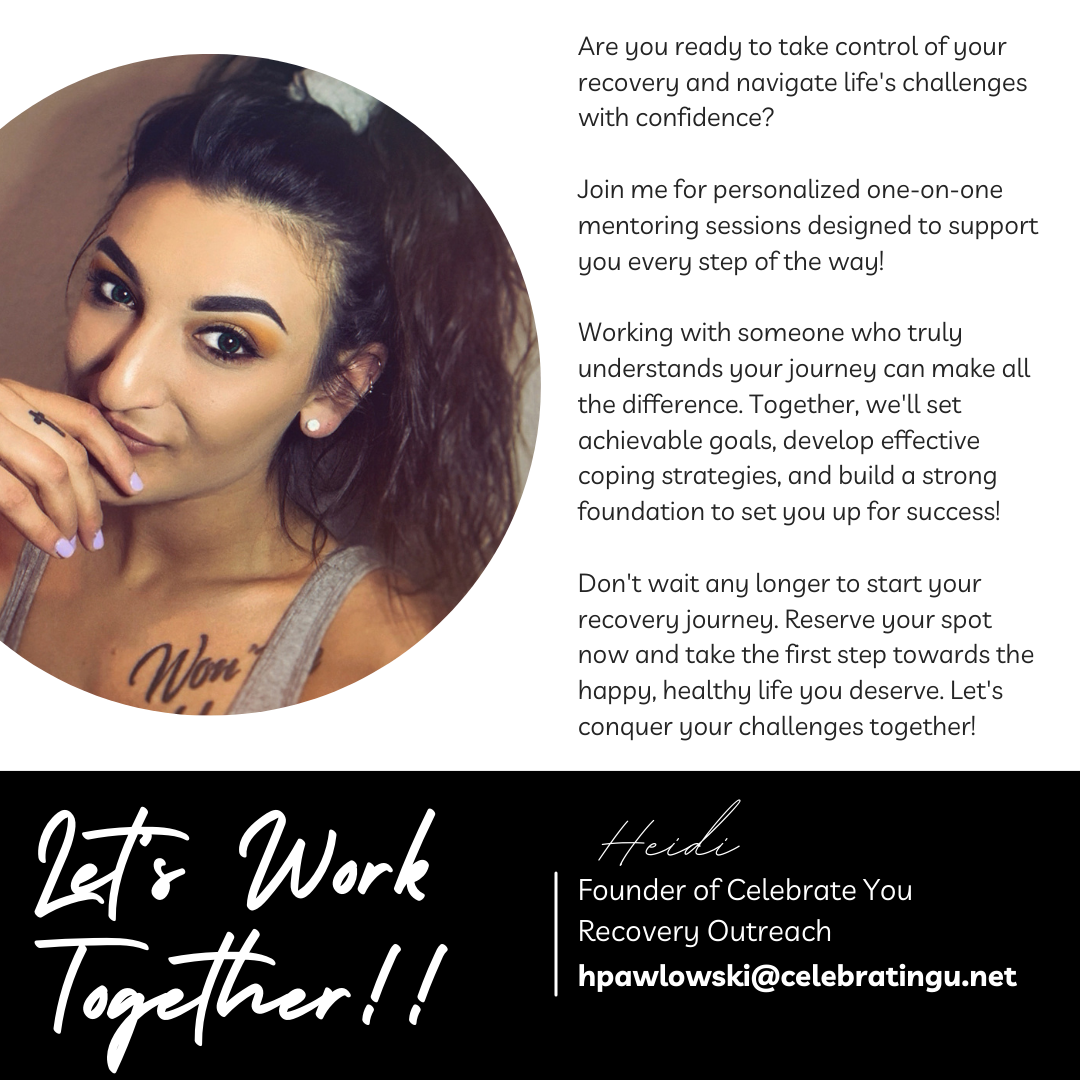
Let’s Work Together!
Our one-on-one peer mentoring sessions are designed to provide personalized, empathetic support, and guidance tailored to your unique recovery journey. These services can still be of value to you, even if you are choosing to not be on the path of absolute sobriety. Mentoring services are designed to help you rebuild your life after any hardship.
What Our Sessions Help With:
Achieving and Maintaining Sobriety: Receive practical advice, coping strategies, and emotional support to help you stay sober (If desired)
Setting and Achieving Goals: Work with your mentor to set realistic recovery goals and develop a plan to achieve them.
Overcoming Challenges: Get guidance on navigating the obstacles and triggers that arise during recovery.
Building a Support System: Learn how to build and maintain a supportive network of friends, family, and fellow recoverees.
Developing Healthy Habits: Establish routines and habits that promote a healthy, fulfilling lifestyle.
Addressing Additional Struggles Aside From Substance or Alcohol Use
What You’ll Get:
This is a one time purchase. You will receive two individual 1:1 virtual sessions with me, scheduled at your own convenience. Sessions are 45 mins - 1 hr long dependent on individual client. Sessions will be held per clients request via zoom audio, video, or phone call. 24/7 texting options available! Looking for daily support ? Or a quick check-in? Let me know and we can set it up!
Purpose and Benefits of Peer Mentoring:
The purpose behind peer mentoring is to provide support from someone who has been in your shoes. Peer mentors offer insights, encouragement, and practical advice drawn from their own experiences with addiction and recovery. This type of support can be incredibly powerful and beneficial for your sobriety, as it:
Promotes Accountability: Regular check-ins help keep you accountable to your recovery goals.
Fosters Connection: Building a relationship with someone who understands your journey can reduce feelings of isolation and loneliness.
Enhances Motivation: Seeing the progress and success of your mentor can inspire and motivate you to continue your recovery efforts.
Provides Hope: Knowing that your mentor has successfully navigated recovery can give you hope and confidence in your own ability to achieve sobriety.
Take the next step in your recovery journey today! I am so excited to get the opportunity to work with you!
Disclaimer:
Our peer mentoring services are designed to offer support, guidance, and encouragement through shared experiences in addiction recovery. However, they are not a substitute for professional or medical advice, diagnosis, or treatment. We strongly recommend that you seek the advice of your physician, therapist, or other qualified health providers with any questions you may have regarding a medical condition or mental health issue. Never disregard professional medical advice or delay seeking it because of something you have discussed with a peer mentor.
