7 Triggers That Led Me To Relapse
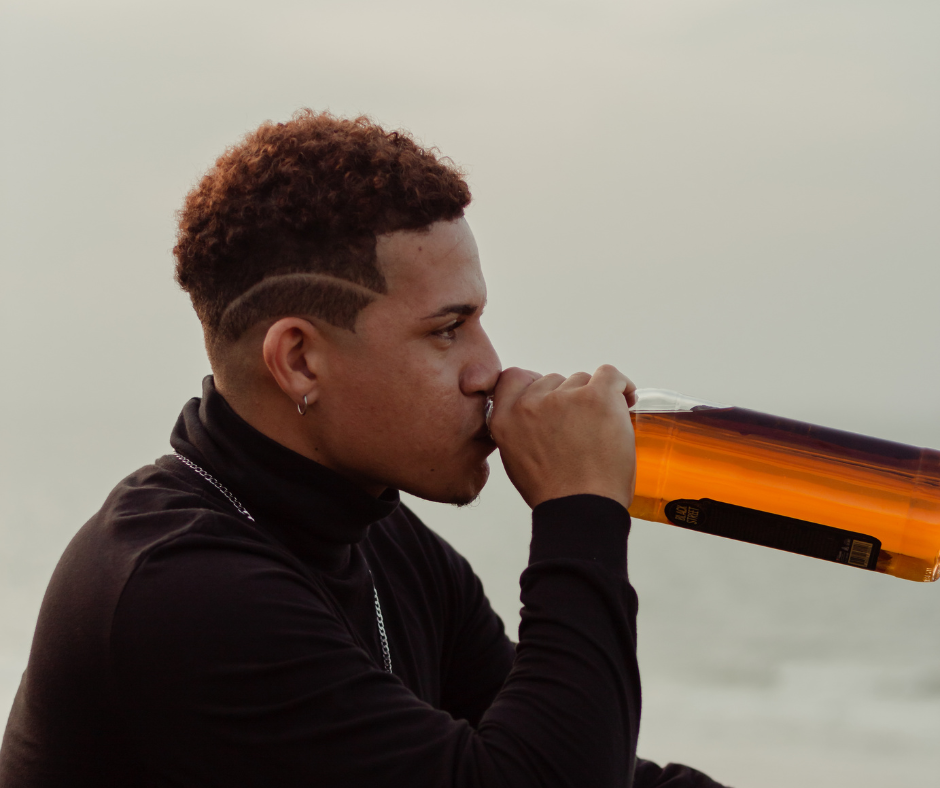
We’ve all had moments where we doubted if being sober was really worth it. I knew while living in active addiction, for over a decade, that I wanted a better life for myself. I just couldn’t quite seem to get there.
I would have small stints of sobriety. Then find myself right back to my old ways.
In this post I wanted to touch on the triggers I faced on my road to recovery that DID lead me back to relapse. My hope in sharing these struggles is that someone else will relate and be open to managing them in ways I wish I had.
Stress
Life can be hectic. Whether you're a parent or have a demanding job - responsibilities pile up and it’s easy to persuade yourself that using would be the perfect way to unwind or fully relax.
Reality: It makes everything harder. I’ve never enjoyed sitting down and having just ONE drink. It always turns into more.
Learning how to manage stress without the use of drugs and alcohol was a huge step in the right direction.
Now I can be fully present for my children. I avoid that gross "hangover anxiety" where the original problem is still there. My sleep doesn't get trashed, and I don't wake up feeling like I’m starting behind every morning.
It’s tempting to want to just turn off your brain with a drink or something else when life gets heavy, but skipping that route actually makes things way easier in the long run.
When you don't rely on substances to take the edge off, you’re forced to actually deal with the mess, which means you get better at handling it the next time it happens.
Drinking was my reward for getting through a hard day. I went through the motions over and over and OVER again before I realized I no longer wanted to be a part of that cycle.
The greatest reward I give myself today is that I don’t reach for a drink when the days done. I have learned to enjoy my down time without the desire to pick back up because I know now what that looks like.
Family Dynamics
They can be ugly.
It’s hard to put into words how much things shifted when my parents divorced in high school. The home I knew completely fell apart.
To deal with the constant uproar and the fighting, I just stopped being there. I started partying and stayed with my friends 24/7 because anywhere was better than being in that house.
I started acting out and quickly became my parent’s biggest disappointment and the family "problem.” That feeling didn't go away—it followed me right into my 20s.
They didn’t take the time to try to understand what I was going through. Instead of seeing someone who was drowning and trying to cope, they saw someone making "bad choices."
I never felt supported. I felt judged. Eventually, I was kicked out of both of their homes. Being outcasted like that makes you start to believe that everyone really is better off without you.
My addiction poisoned my relationship with my brother. He had a front-row seat to the chaos, and it turned into deep resentment. We’ve spent years either screaming at each other or going months without saying a single word.
I had to come to terms with the fact that no one else is responsible for how I chose to cope. I was the one making those choices, and I had to own the way my actions hurt the people I love.
It wasn’t an overnight thing. It took some time and consistent sobriety for any real forgiveness to surface.
Today, I’m not saying our family is perfect—we still have our stuff—but things are finally calm. It’s amazing how much things change when you’re not using. We actually get along. We spend the holidays together. When issues arise, we actually try to solve them together instead of tearing each other apart.
Amends have been made, and while we can't erase the years we lost, the peace we have now is something I don't take for granted for a second.
“Fun”
Especially in my teen years, I never wanted to feel like I was being left out. If there was a party - I was there. If my friends were drinking, so was I. I wanted to enjoy myself right along with everyone else.
The desire for "normalcy" outweighed my commitment to sobriety.
I would watch everyone else laughing and grabbing drinks, and I couldn't stand the idea that I was missing out on the real connection happening there. I didn't want to be the sober friend who everyone felt they had to walk on eggshells around.
I hated the thought of people not inviting me out because they didn’t want to monitor their intake or worry about “triggering” me.
Reality: It was triggering. I would easily join in with what everyone else was doing and deal with whatever the consequences looked like later.
I had to learn there were other ways to spend my time than out at the bars or with a group of people that found enjoyment in getting plastered every weekend.
I promise you you’re not missing much. You avoid the temptation. You save money. No hangovers. Your memory still fully intact. It’s worth skipping the “fun.”
Instant Gratification
When I told myself I was going to get sober, I expected my life to get better. Immediately. When things didn’t work out that way, I was really disappointed. My desire to stay sober went right out the window.
Being miserable because I had to live each day without being loaded seemed like a hefty enough price to pay for the rest of my life to work out the way I wanted it to. Not how it goes.
When I first got some sober time under my belt, I kind of expected a grand reopening of my life. I figured since I was doing the work, my family would instantly forgive me, I’d regain my independence, and I’d have my daughter back in my arms.
It hurt that things were still messy despite my effort, and my brain told me the easier way to deal it was just to go back to using. I relapsed because I wanted the rewards of recovery without realizing that shit takes a lot longer to build than it does to break.
I had to learn to just take it (as they say) one day at a time and focus on doing the next right thing, even if it felt pointless.
Those small, boring, honest choices don't feel like much in the moment—it’s like watching fucking grass grow. You don’t notice the change day-to-day, and it can be frustrating. But then, you look back six months or a year later and realize everything is completely different.
Relationships mend, trust comes back, and life actually looks good.
Heatbreak & Grief
Nothing makes liquor taste better than a broken heart.
When my long-term relationship ended, it was a total betrayal of the future I’d planned. I was left feeling completely empty and I didn't know how to carry it. I had to start over from scratch, rebuild a life while grieving the "us" we used to be and the person I was when I was with him.
My first instinct, the only one that felt natural at the time, was to escape. I wanted to outrun those emotions because sitting with them was really unpleasant.
I learned that you can't actually heal or process that kind of pain while you're using. You might numb it for a night, but it’s still sitting there waiting for you when you wake up, and you can’t get to the other side of grief without being sober enough to walk through it.
When it comes to failed relationships, I’ve learned not to give anyone the satisfaction of seeing me suffer. I refuse to ever again let someone else’s actions dictate my future or cause me to backslide. At the end of the day, you’re the only one there to pick you back up. Look at the rejection as some much needed redirection.
Then there was my Nana. Losing her was a different kind of pain. It was so hard to accept that the world was just going to keep spinning without her in it, and that my life was truly changed forever.
Between that and losing my boyfriend Nick to suicide two years ago, I’ve had to completely shift how I handle grief.
I realized that the people I’ve lost and loved so much would be devastated if they saw their death become the reason I lost my own life. I try to live now in a way that would make them proud, rather than letting my pain dishonor their memory.
Connections
Sometimes, the people who are the most dangerous to your sobriety and well being are the ones you actually care for the most, which makes drawing a line feel like hell.
The reality is that someone can be a good person and still be bad for you. If a connection requires you to sacrifice your safety, your mental health, or your sobriety - that relationship has become a liability. You aren't judging their character - you’re protecting your life.
Every time you make an excuse for someone who hurts you or triggers you, you are essentially telling yourself that their comfort is more important than your survival.
I was in a relationship with a man who found enjoyment in drinking and “recreationally” using cocaine. I told myself that it would never be an issue for us because he “managed” it and never brought it home. Keeping the relationship was more important to me than being honest with myself.
It took a year and half, but it still happened…. Before you know it we were both using together. So word of advice: choose you.
self-hatred
In active addiction, your mind is often overtaken by cravings and survival. When you find sobriety, that fog lifts. While clarity is a gift, it also brings a sharp, unforgiving lens into the past.
It’s a crazy realization to acknowledge that the very thing you use to escape, is often fueled by the way you view yourself when you’re sober.
The mind is an expert at sabotage. When you are faced with the shame of past choices, it is incredibly easy for your internal monologue to convince you that you are fundamentally "no good."
Your mind convinces you that you don't deserve sobriety or a good life. Relapse then becomes a way to silence that hateful inner voice, even though it only ends up reinforcing the cycle.
The turning point happens when you stop waiting to feel worthy and start acting worthy. I had to start showing up as the person I knew I was on my way to becoming - before the feelings caught up.
I started to act according to my values rather than my impulses. Whether it was being honest, showing up for work, or being present for my loved ones, these small acts of integrity were the building blocks of my new identity.
If you’re reading this and you’re feeling that heavy pull towards the exit ramp, just know you aren’t failing at recovery. Relapse is a brutal teacher, but it’s still a teacher. Remember, it doesn’t have to be a part of your journey.
I look back at past situations that broke me and realize I just needed to give myself a little more grace. I don't look back with regret anymore because the lessons I learned while in the trenches are the only reason I’m still standing now.
Be grateful for your individual journey.
Keep showing up. Even if it’s messy. Especially if it’s messy.
Let’s Work Together!
Visit our Service Page today to explore how we can work together. While you're there, you can sign up for a free discovery call. This is a no-pressure space for us to connect, discuss your goals, and see if our partnership is the right fit for your recovery.
Questions or just need a bit of extra support right now? Please don't hesitate to reach out. You can contact me anytime at:
Email: hpawlowski@celebratingu.net