What To Do In Your First 24 hours Sober
Before anything else, I want to make sure to mention that the first 24 hours of sobriety are going to look totally different for everybody.
This article is not medical advice, nor is it intended to replace professional treatment, medical care, detox, or emergency services. Depending on the substance you have been using, how much you have been using, how long you have been using it, and your individual health history, stopping suddenly can be dangerous and may require medical supervision.
Certain substances, including alcohol and some medications, can cause serious or even life-threatening withdrawal symptoms.
If you believe you may need medical detox, treatment, medication, or professional support, please seek it. There is absolutely no shame in needing help.
Everything I am sharing here is based on my own personal experience, what helped me, what I learned along the way, and what I wish I had done differently when I first started trying to get sober.
This article is intended for personal insight and educational purposes only. If you are in immediate danger, experiencing severe withdrawal symptoms, or feel that something is medically wrong, please seek appropriate medical attention rather than trying to handle it alone.
With that said, let's talk about those first 24 hours.
Your First 24 Hours Sober
There is something incredibly strange about the first day of sobriety. For some people, it might be the first time they have seriously considered getting sober. For others, it might be day one for the tenth, twentieth, or hundredth time.
It took me many, many failed attempts to get sober for good—or, more accurately, to get me to where I am today. I didn't wake up one morning and suddenly know how to live a sober life.
There were plenty of starts and stops. There were promises I made to myself and didn't keep. There were days when I genuinely believed I was done, only to fall back off again.
There were times when I thought I could control my using. Times when I thought I could keep certain harmful things around. And, times where I convinced myself that I could handle certain triggers that I really couldn't.
Eventually, I started learning from those experiences.
If there is one thing I want someone who is sitting there on day one to understand, it’s that everyone starts at day one. In order to get to one week, a month, or 10 years…. we all have to get through a day one.
Accept That You Probably Aren't Going to Feel Great
Depending on what you have been using and your individual circumstances, your first 24 hours may not feel particularly inspiring.
You might be tired, irritated, anxious, emotional. You might have trouble sleeping. You might feel restless, uncomfortable, foggy, angry, sad, overwhelmed, or like you want to crawl out of your own skin.
Again, withdrawal can be medically serious depending on the substance, so don't try to tough out dangerous symptoms just because you think sobriety is supposed to be uncomfortable.
Assuming you are medically safe and receiving whatever care you need, remember you’re bound to feel like shit the first day (and probably a few more after that). But, you’ll be alright.
You don't need to feel overly motivated. You don't need to feel happy. You don't need to feel like you've suddenly become a completely different person. Your only job right now is to make the next right decision…. and then make another one…. and then another.
give yourself grace
When you're getting sober, it can feel like you suddenly have this enormous list of things you need to fix.
Your relationships. Your finances. Your job. Your health. Your living situation. Your legal problems. Your family. Your mental health. The mess in your house. The damage you caused. The things you said. The things you did. The things you lost.
It can all become incredibly overwhelming.
You cannot fix your entire life in 24 hours.
Right now, focus on the basics.
Drink some water. Eat something if you can. Take a shower. Brush your teeth. Put on clean clothes. Open a window. Go outside. Go touch some grass. Seriously.
Get out of the four walls you've been sitting inside and feel the sun on your face. Take a slow walk. Sit on your porch. Stand in your backyard. Go somewhere peaceful.
Sometimes recovery starts with incredibly ordinary things.
You don't have to have some profound spiritual awakening on day one. Sometimes, day one is simply drinking a glass of water and deciding not to use and that’s enough.
Making the Decision
Dedicate yourself to the possibility of success. I had to start taking the decision to get sober seriously. That doesn't mean I knew exactly how I was going to stay sober forever. I didn’t. Still don’t. I could only decide what I was going to do for that day. And now, today.
There is a huge difference between saying, "I hope I don't use today," and saying, "I am going to do everything I possibly can to make sure I don’t pick up today.” That mindset matters.
Get Rid of the Things That Could Pull You Back In
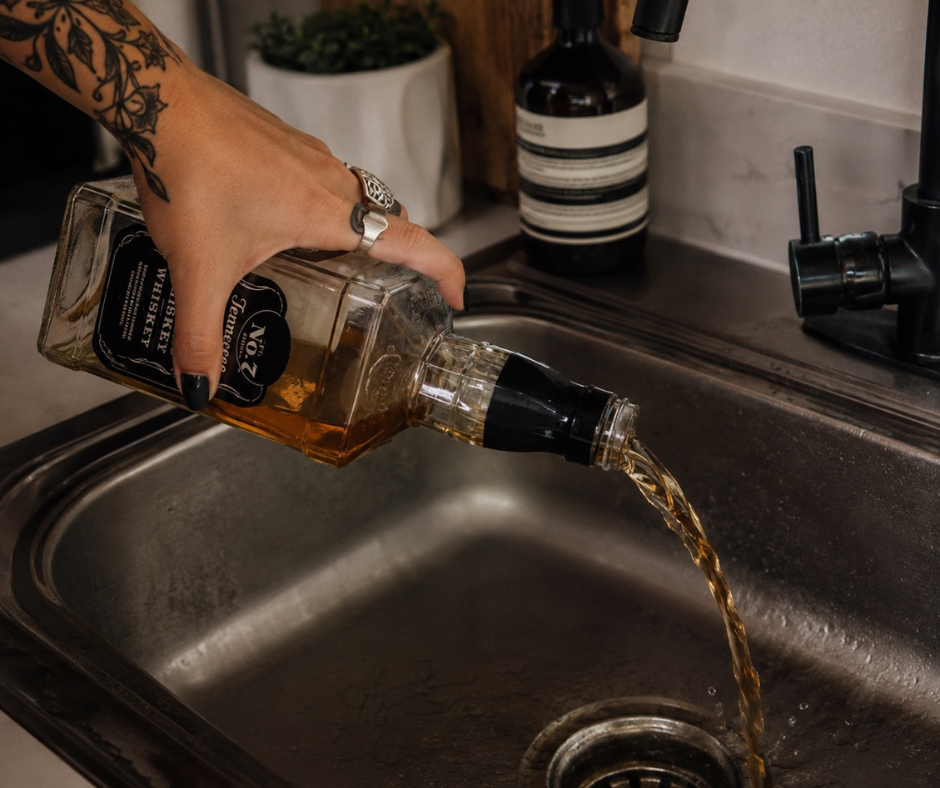
This was a huge one for me. No reservations. When I decided I was serious about giving up drugs and alcohol, I had to get rid of the things around me that were connected to using. Everything.
The paraphernalia. The stash. The little hidden things. The things I had convinced myself I would never touch again. The things I thought I could keep around just in case. The things I thought I was strong enough to ignore.
I wasn't interested in making sobriety harder than it already was. I learned you don't get bonus points for keeping a trigger around to prove you can resist it.
If something has the potential to pull you back into using, you don't need to keep it as some kind of test of your willpower.
Throw it away. Get it out of your house. Get it out of your car. Get it out of your room. Get it away from you. If you need someone else to help you get rid of it, ask them.
If you are serious about walking away from something, remove as many opportunities to return to it as you possibly can.
Tell Someone
Isolation can be incredibly dangerous in early recovery. You don't necessarily have to announce your sobriety to the entire world. However, I strongly encourage you to tell at least one safe person.
Call somebody. Text somebody. Tell a trusted friend. Tell a family member. Reach out to someone in recovery. Contact a mentor. Talk to a counselor or treatment professional.
Something as simple as, "I'm trying to get sober and I need some support today." That’s it.
If the people around you aren't supportive of your sobriety, that doesn't mean you don't deserve support. It means you may need to look outside of your usual circle for people who understand what you're trying to do.
Go to a Meeting or Find Some Kind of Recovery Support
One of the best things you can do during those first 24 hours is put yourself somewhere that keeps your mind focused on recovery.
That might be an AA meeting, NA meeting, SMART Recovery, church or faith-based group, treatment program, peer support group, online recovery meeting…
There isn't one path that works for every person. The important thing is finding some form of healthy support and accountability.
When you're sitting alone with your thoughts, your brain can come up with some pretty convincing arguments for why you should use again. Getting around other people who understand addiction can remind you that you're not the only person who has ever felt this way.
Sometimes you don't even need to talk. Just show up.
Keep Your Day Simple
Your first 24 hours don't need to be exciting.Give yourself permission to have a boring day. There’s a difference between bored and void. Don’t allow yourself to have void time. Do something. Anything.
Watch a movie. Take a shower. Make some food. Drink coffee or tea. Listen to music. Take a walk. Journal. Clean one small area. Sit outside. Play with your pets. Call someone. Go to a meeting. Read.
Stay away from places where you know you are likely to encounter drugs or alcohol. Don't put yourself into unnecessary situations where you are going to have to fight temptation.
Your first day is not the time to prove anything to anybody. Protect your sobriety.
Eat Something
This sounds ridiculously simple, but taking care of your body matters. If you can eat, try to get something into your system. It doesn't have to be a five-star meal just whatever feels manageable.
After spending so much time neglecting yourself, sometimes the most productive thing you can do is start treating your body better.
Drink Water
Hydration is another basic thing that is easy to overlook. Keep a bottle of water with you. Take small, regular sips.
If you're having significant vomiting, dehydration, severe withdrawal symptoms, or anything that concerns you medically, don't assume drinking water at home is going to fix that. Get appropriate medical care.
For the basics of taking care of yourself? Drink some water. Your body has been through enough. Start giving it something it actually needs.
Stay Away From the People, Places, and Things
This doesn't mean you have to permanently cut every person out of your life on your first day. But, you should be honest with yourself.
If you know that going to a particular house, hanging out with a particular group, driving down a particular street, or answering a particular person's phone call is likely to lead you right back to using, you don't need to put yourself there.
Early sobriety isn't about seeing how close you can get to the edge without falling over. It's about stepping away from the edge.
You can figure out the complicated relationship stuff later. Today, protect yourself.
Write Down Why You Want to Get Sober
If you're having a clear moment, write it down.
Why are you doing this? What do you want your life to look like? What are you tired of? Who do you want to become? What do you want back?
Maybe you want your family back. Maybe you want your health back. Maybe you're tired of lying. Maybe you're tired of being sick. Maybe you're tired of waking up wondering what happened the night before. Maybe you simply want peace.
Whatever your reason is, write it down.
There will be a day when your brain tries to convince you that sobriety isn't worth it. Having something tangible to look back on can help remind you why you started.
I have created a digital download dedicated specially to establishing your “why?” It is completely free! You can download it by clicking here.
Don't Make Huge Decisions Just Because You're Newly Sober
You may feel incredibly emotional during your first few days. You might be angry at everyone. You might suddenly want to quit your job, move across the country, end every relationship you've ever had, start an entirely new career, or make a thousand other major changes.
Some of those decisions may eventually need to happen, but you don't have to make them all today.
Give yourself some time. Get stable. Get support. Get some distance from the chaos. Then start figuring out what needs to change.
Sobriety itself is already a huge change. You don't need to rebuild your entire life before bedtime.
Give Yourself Something to Look Forward To Tomorrow
Maybe you'll go to another meeting, call someone, go for a walk, you'll work on your recovery plan, get up and make breakfast, start looking into treatment…
Whatever it is, give yourself a small goal or ambition to reach. Something that makes the thought of waking up tomorrow a little less sucky.
I think sometimes we put so much pressure on ourselves to do recovery right, that we forget what we're actually trying to accomplish.
You're trying to stop destroying yourself. You're trying to create some space between yourself and the thing that has been controlling your life. You're trying to give yourself another chance. That’s a really big deal.
Day one might be messy (probably will be). You might cry, be angry, hell you might sleep all day. You might question yourself. You might not know what you're doing…. and that's okay.
You don't need to be good at sobriety. You just need to keep choosing it.
If you slip, that doesn't mean the entire effort was pointless. It means you need to look at what happened, get honest about what you need, and reach for more support.
For me, sobriety was a lot of decisions. A lot of lessons. A lot of failures. A lot of getting back up. And eventually, those decisions started adding up. That's how I got to where I am today.
One day can really change the direction of your life.
Need Someone to Help You Get Started?
If you're struggling with where to begin, you don't have to figure it all out by yourself. If you're ready to start making changes and want some support getting on the right path, sign up for a free call with me. We can talk about where you are, what you're struggling with, and what your next steps could look like.
Start with today. Then we'll figure out tomorrow.
If you're ready to get sober but aren't sure where to begin, my First 30 Days Sobriety Bundle is the perfect place to start.
Packed with worksheets, recovery tools, practical tips, exercises, and reflection prompts, this bundle walks you through your first 30 days and gives you something to lean on as you navigate early sobriety.
These are the tools and practices that helped me throughout my own recovery journey, all brought together in one workbook to help you stay focused, build healthy habits, and take sobriety one day at a time.
You don't have to figure it all out on your own. Start here.

Don't let the obstacles of early sobriety hold you back.
The First 30 Days Worksheet Bundle is packed with as many practical tools, topics, exercises, and recovery steps as I could possibly fit into one bundle — based on the things I personally did, the things that helped me stay sober, and the things I wish I had done differently along the way.
The first 30 days of sobriety can be really fucking hard.
I created this bundle to give you something to work through, come back to, and revisit whenever you need it. You can take it one worksheet at a time, move at your own pace, and return to the tools that continue to help you throughout your recovery.
Because getting sober is one thing. Learning how to stay sober and build a life you actually want to live is the work.
Discussions Include:
♡ Personal Inventory Checklist
♡ Understanding Addiction
♡ Self-Reflection
♡ Establishing Your "Why?"
♡ Self- Love & Self-Acceptance
♡ Practicing Self-Care
♡ Habit Tracking
♡ Activity Planning
♡ Life Balance
♡ Deescalating Emotions
♡ Mood Tracking
♡ What's In Your Control
♡ Overcoming Intrusive Thoughts
♡ Fighting Urges
♡ Identifying Triggers
♡ Discovering New Passions
♡ How To Establish Support System
♡ Meeting Attendance Reflections
♡ Setting Boundaries
♡ Making Peace With The Past
♡ Making Amends
♡ Goal Setting
♡ Morals & Values
♡ How To Reinvent Yourself
♡ How To Start Daily Journaling
♡ Establishing A Higher Power
♡ How To Stop Procrastinating
♡ Relapse Prevention Plan
♡ Helping Others
♡ Celebrating Milestones
& MUCH MUCH MORE!!
Upon purchase, you will receive an instant pdf file download, granting you the freedom to print unlimited copies for personal use. Formatted in the standard A4 size, these worksheets are designed for seamless integration into your recovery routine.
It's important to note that the resale or unauthorized copying of this product is strictly prohibited, as all rights are reserved. We take great pride in our work and aim to protect the integrity of this invaluable resource.
Please be advised that all digital downloads are non-refundable. However, we are confident that you will find our worksheets to be immensely beneficial. Should you have any questions or concerns, please don't hesitate to reach out. Our commitment is to ensure your satisfaction and provide the necessary support throughout your recovery journey.
This is an instant download and no physical product will be shipped.
These worksheets should not be used in place of professional advice from a mental health professional.
© ALL DESIGNS are copyrighted and property of Celebrate You Recovery Outreach. This product is intended for PERSONAL USE ONLY. Any duplication or resell of this product is prohibited.
Thank you!
Enjoy:)